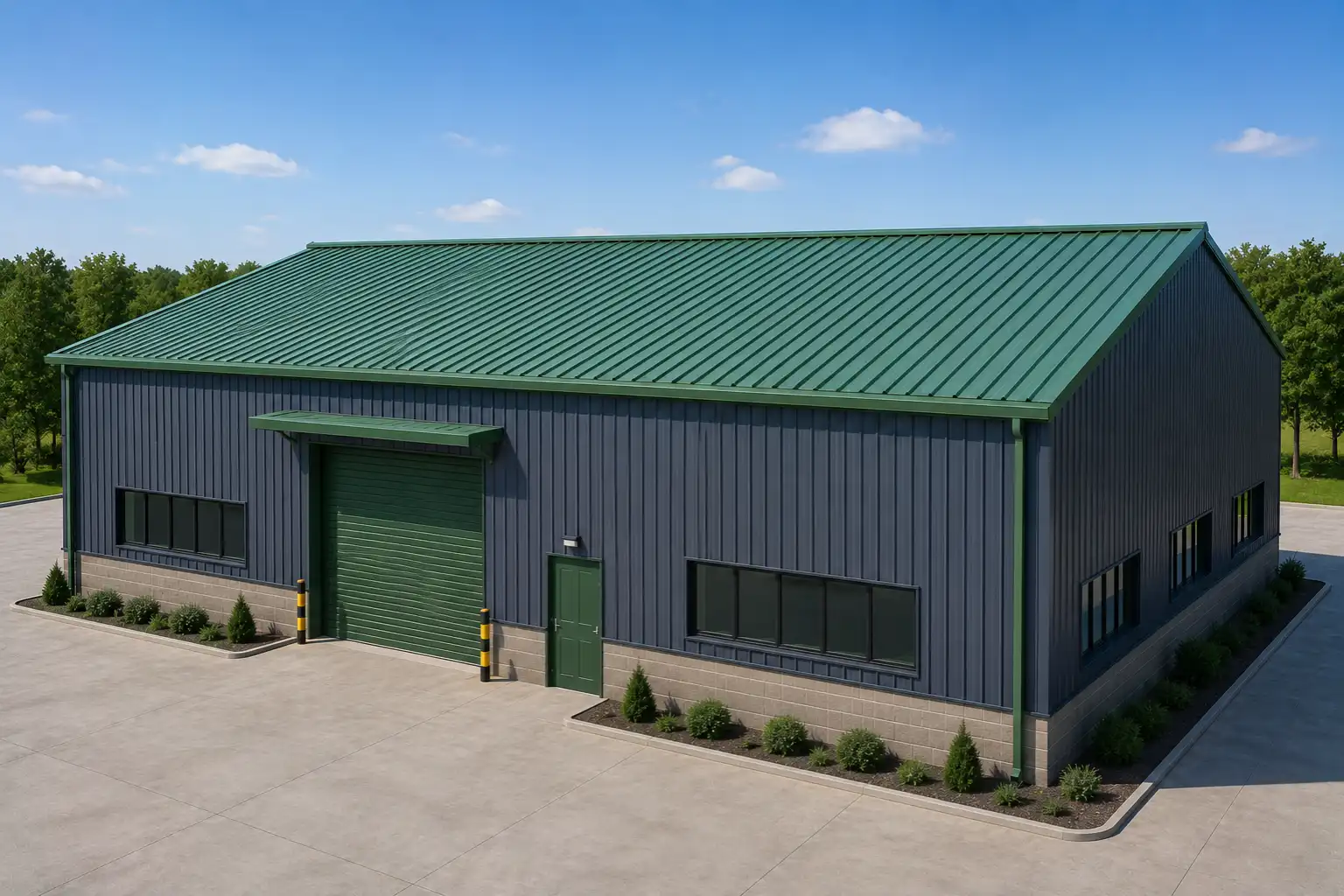
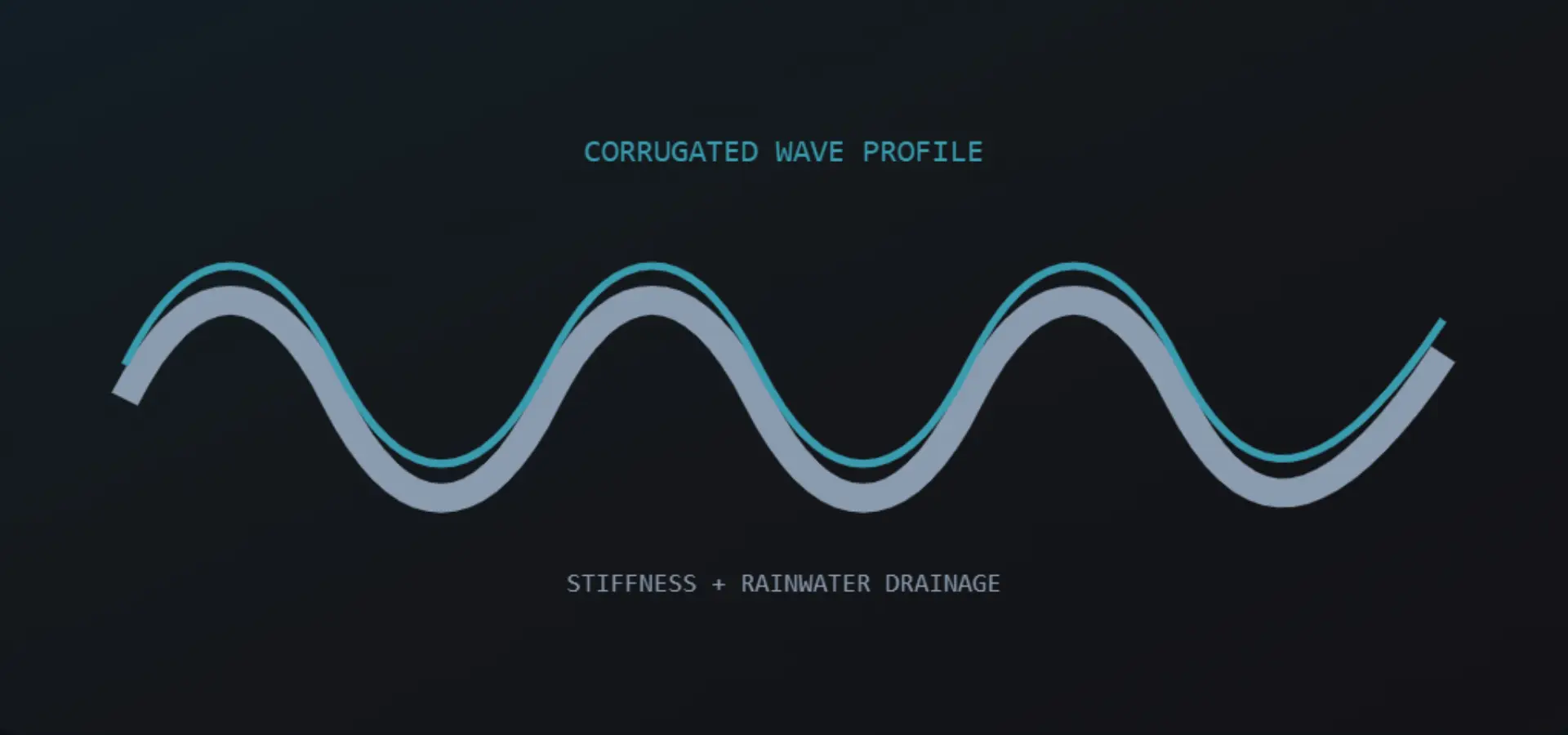
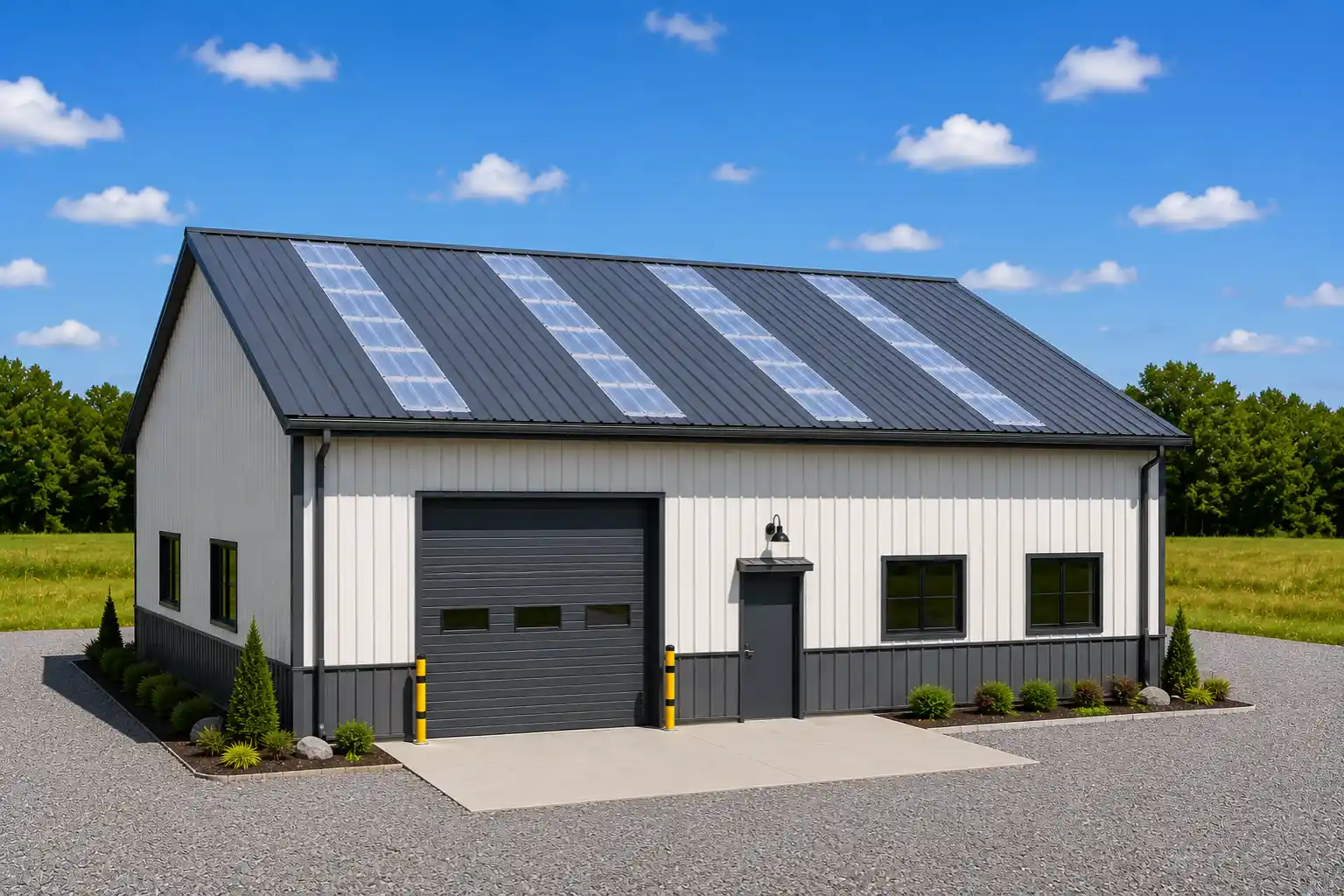
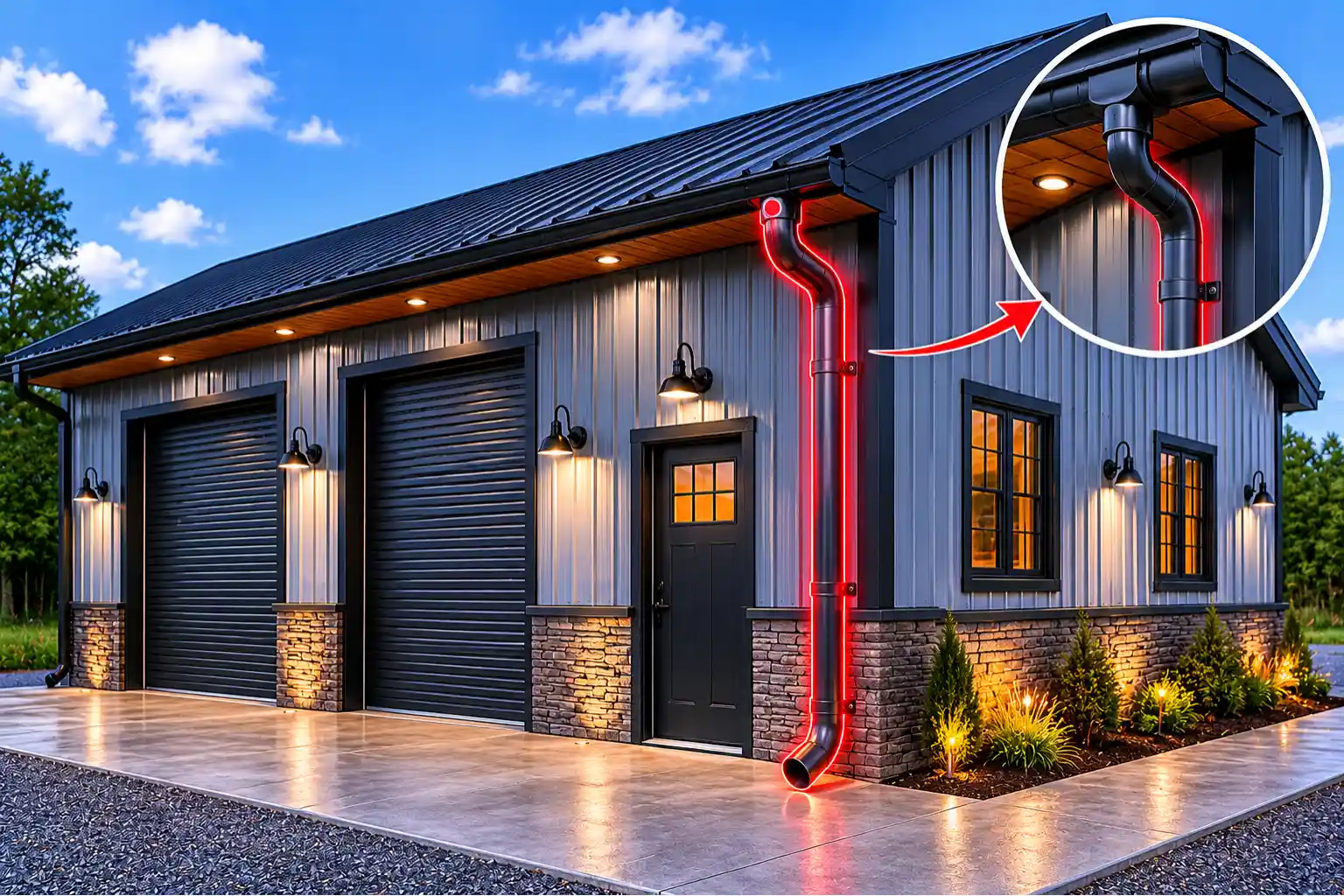
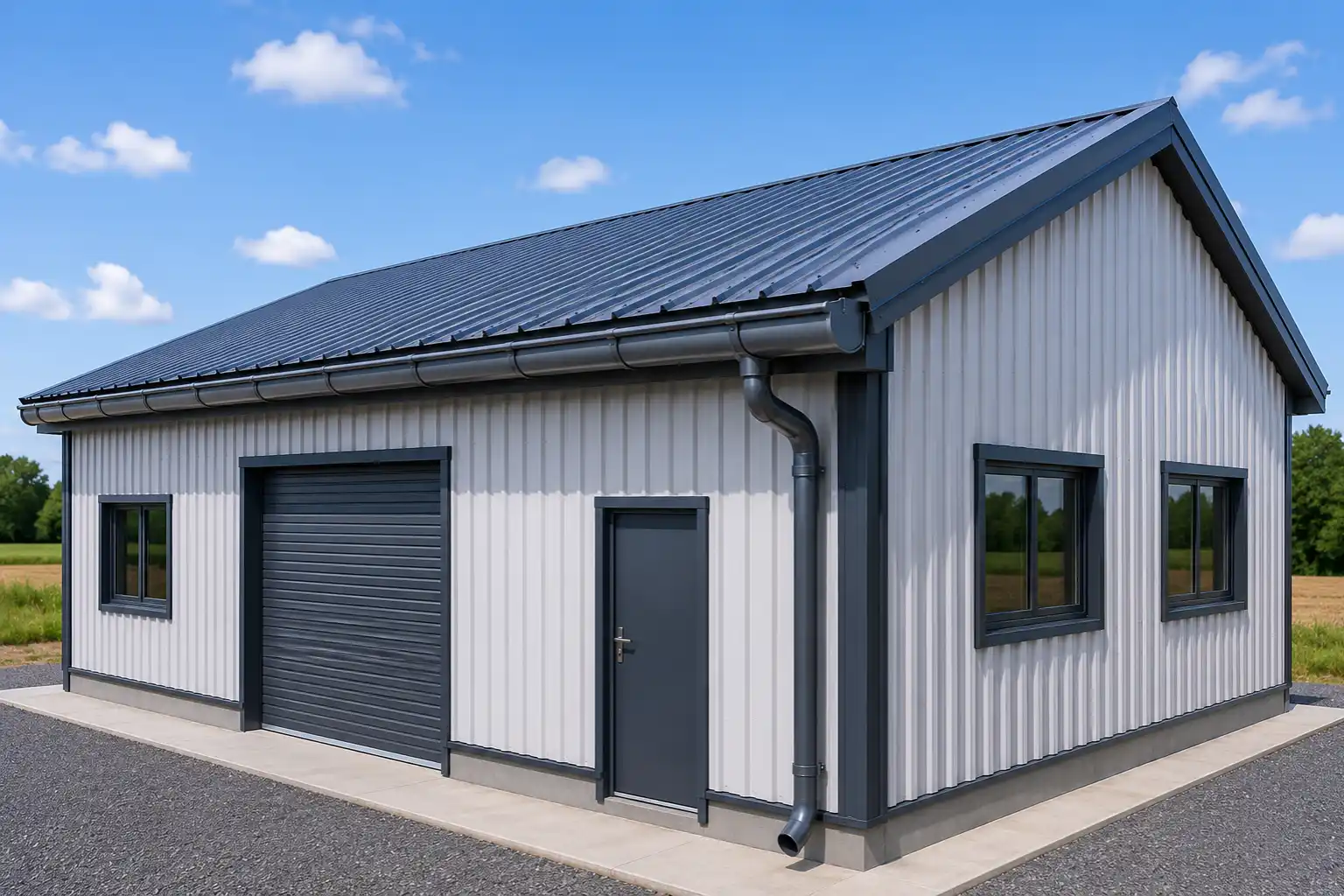
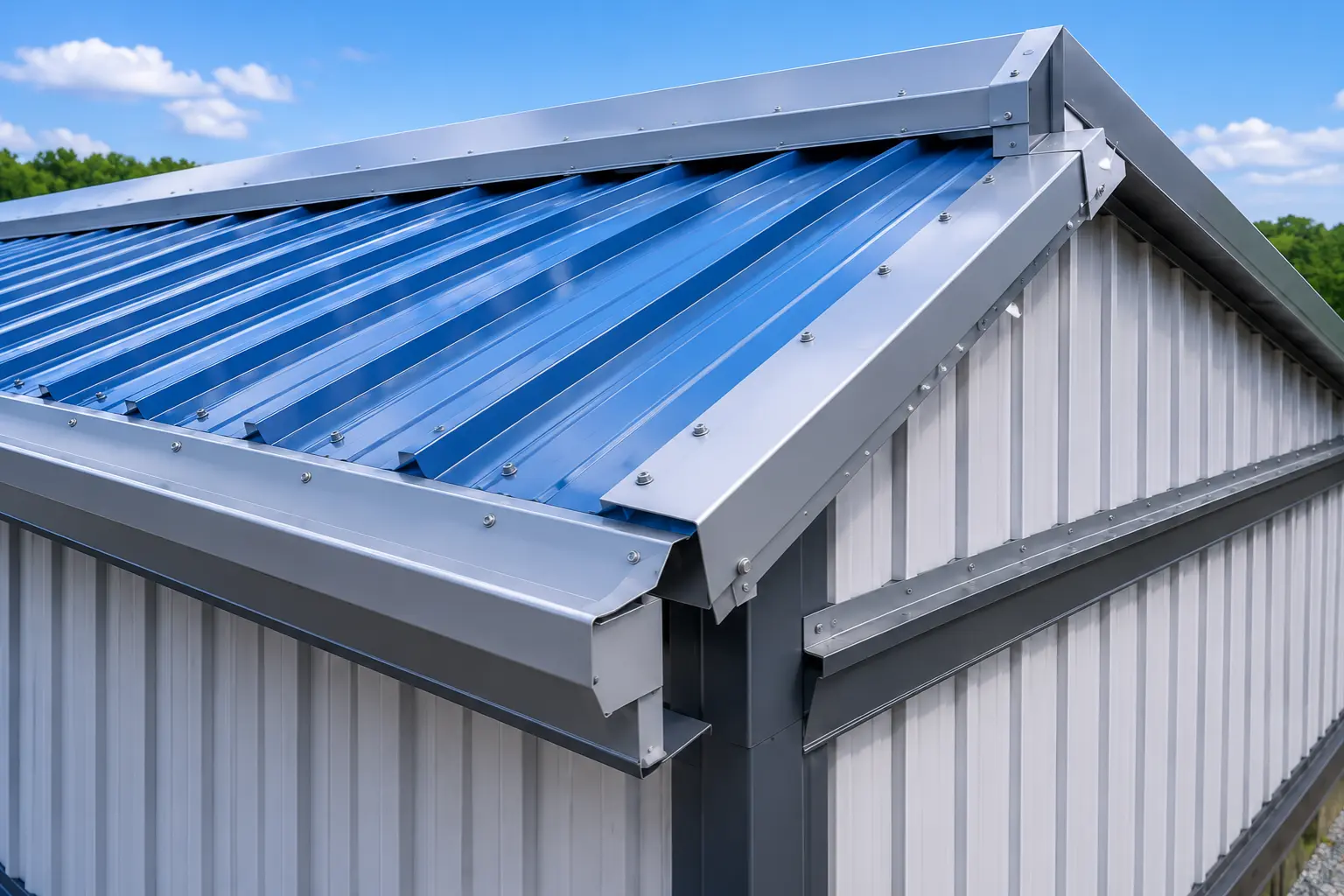
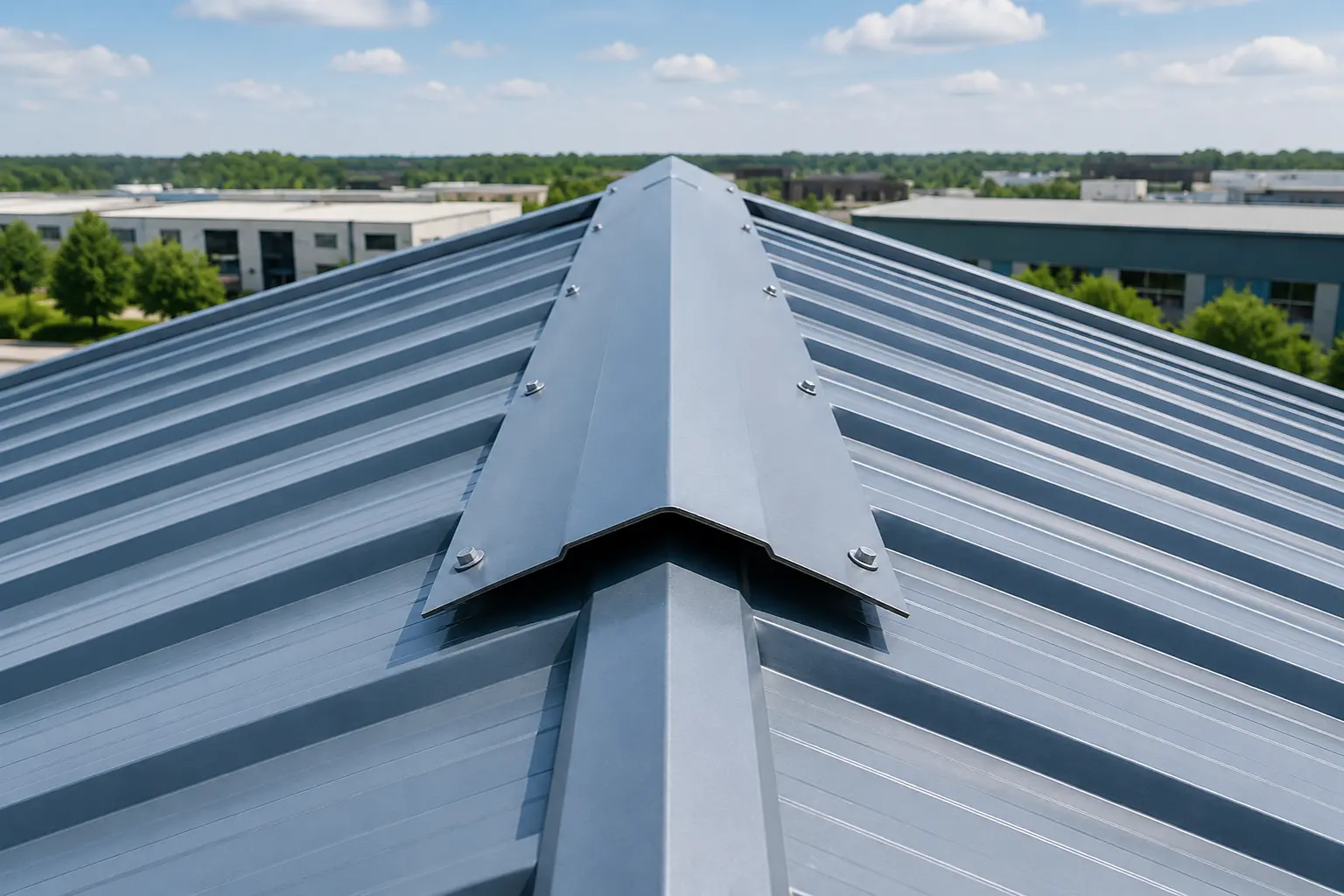
Corrugated roofing sheet has a wave-like profile that improves stiffness and water drainage. It is widely used for sheds, farms, warehouses, and simple industrial buildings.
Technical Note: These values are practical reference ranges for product education and website display. Final dimensions, loads, coating, and material grade should be confirmed by project drawings and local building standards.
Parameter
Specification / Range
Parameter
Range
Base Material
Galvanized, galvalume, or pre-painted steel
Profile Shape
Continuous wave corrugation
Wave Height
Customized by roll forming profile
Thickness
0.25–0.80mm
Length
Cut to required roof length
Overlap
Side lap and end lap according to slope
Fasteners
Roofing screw with EPDM washer
Accessories
Ridge cap, flashing, gutter, foam closure
Structural Diagram
The diagram is a simplified educational illustration for Corrugated Roofing Sheet. Use it to explain structure, function, and installation logic to website visitors or sales trainees.
Who Buys This Product
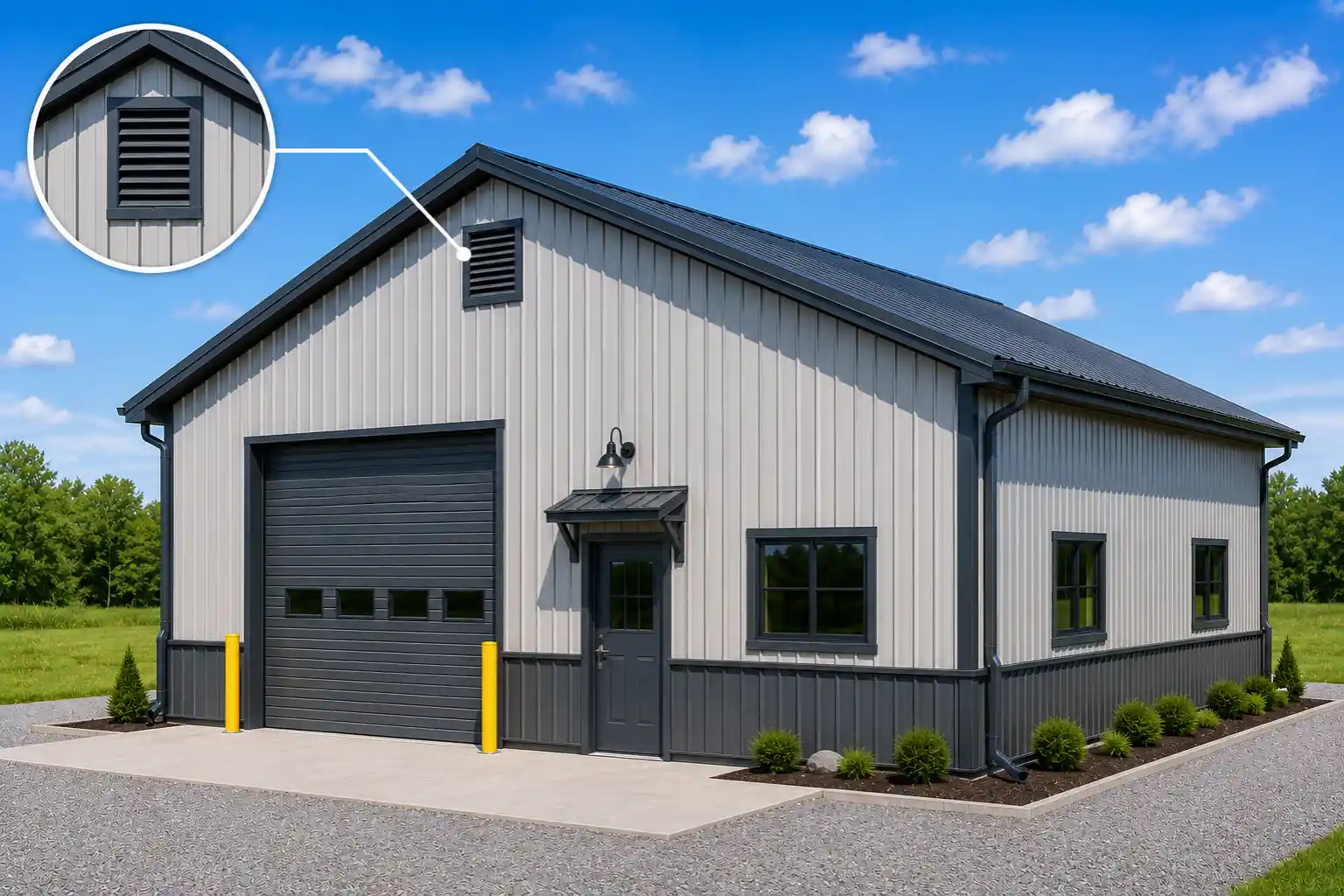
Farm Shed
Sales Tip: When presenting this product, ask about project size, local climate, installation plan, expected service life, and budget. For export buyers, clear drawings, packing marks, and fast response are major trust builders.
Test Your Knowledge
Why does corrugation help a roofing sheet?
It improves stiffness and drainage
It removes the need for screws
It turns steel into concrete
It blocks all sunlight automatically
Related Products
Explore our related steel structure products designed for durability, strength, and versatile industrial applications.
We serve clients across industrial manufacturing, logistics and warehousing, commercial real estate, hospitality, infrastructure, and residential development. If a structure has a steel frame, we can build it.
Can WellDone Steel work from architect or third-party engineering drawings?
Absolutely. We regularly fabricate and erect from client-supplied drawings. Our estimating team will review your documentation and provide a detailed quote. We can also offer value engineering suggestions to optimize cost without compromising structural performance.
What certifications and quality standards do you hold?
WellDone Steel is ISO 9001 certified for quality management. Our welding procedures are certified to EN ISO 3834, and all structural steel supplied meets EN 10025 and relevant national building standards. Full documentation is provided with every project.
How long does a typical steel construction project take?
Timelines depend on project scope. A standard industrial building of 5,000–10,000 m² typically takes 12–18 weeks from contract award to structural completion. Larger or more complex projects are scheduled individually during the tender phase.
Do you handle both fabrication and on-site erection?
Yes — we are a fully integrated steel contractor. Managing fabrication and erection under one contract eliminates coordination risk, speeds delivery, and gives you a single point of accountability throughout the project.
Can I make changes during construction?
Yes, but changes may increase costs and delay the timeline. It’s best to finalize designs before work begins.