If you are planning a factory, warehouse, or workshop in Egypt, one of the first questions is not what to build but where the steel should come from. Choosing reliable steel structure companies in Egypt is an important step. Should you hire a local steel structure company in Egypt that fabricates in-country, or import a prefabricated steel building directly from an overseas manufacturer?
There is no universal answer. Local fabrication can win on speed and simplicity for smaller projects, while direct import from experienced steel structure suppliers in Egypt or overseas manufacturers may offer advantages in cost, engineering depth, and scale for larger projects. This guide compares both routes on price, lead time, quality control, compliance, and risk, then gives you a checklist for evaluating suppliers before you sign.
A note on transparency: Welldone Steel is an importer, so we have a point of view. We will be clear about where local fabrication is the better answer.
Why the sourcing decision shapes the whole project
Structural steel is one of the largest cost lines in an industrial building, so the sourcing route affects your budget, schedule, and long-term performance. Egypt’s growing industrial zones, logistics parks, and manufacturing expansion are pushing more developers toward prefabricated steel buildings, because the frame is engineered and fabricated off-site and erected in weeks rather than months. But “prefabricated” says nothing about where the fabrication happens. That is the choice this article addresses.
Two routes, clearly defined
Local fabrication: An Egyptian company buys steel plate, sections, and coil (domestic or imported), then cuts, welds, and finishes the members in its own or a subcontracted workshop. The same company usually handles erection.
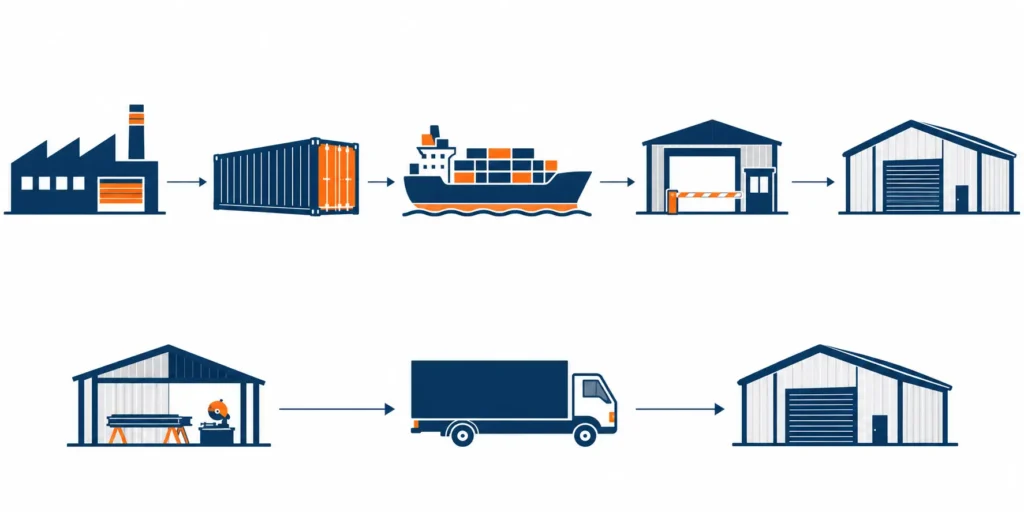
Direct import: A pre-engineered building (PEB) package, including primary frames, purlins, girts, roof and wall sheeting, bolts, and accessories, is designed and fabricated at an overseas factory, shipped to Egypt, cleared through customs, and erected on site. An importer such as Welldone Steel manages that chain on your behalf.
Advantages of importing a steel structure
- Cost efficiency at scale.Large overseas plants buy raw steel in volume, run automated cutting and welding lines, and spread engineering cost across many projects. For larger buildings this often produces a lower installed cost per square meter, even after freight and duties.
- Optimized engineering.PEB manufacturers use specialized design software to size each frame member for the actual loads, which can reduce steel weight compared with conventional fabricated designs.
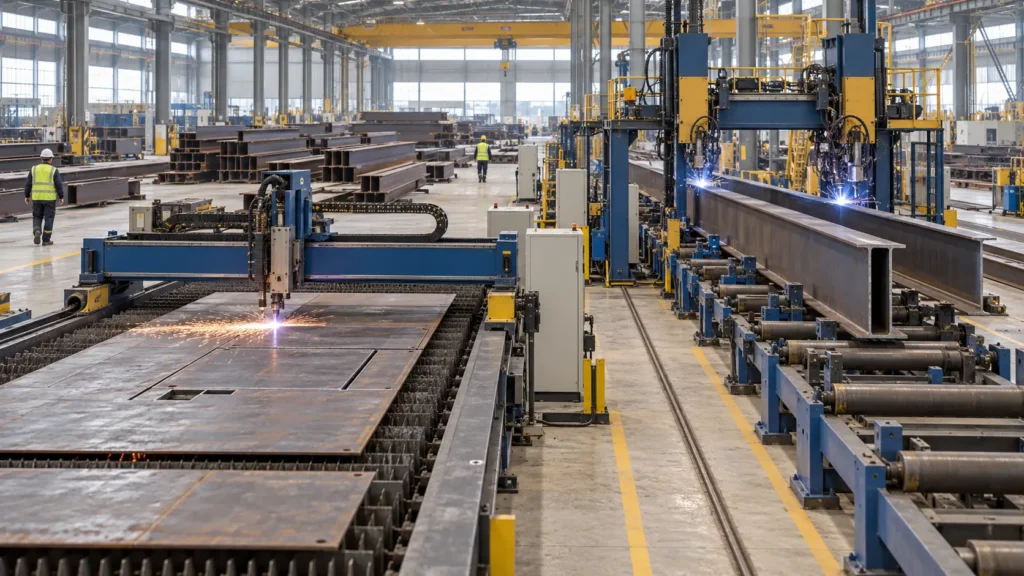
- Consistent, repeatable fabrication.Automated lines tend to deliver tighter tolerances. Members arrive numbered with bolted connections, which cuts on-site welding and speeds erection.
- Parallel scheduling.The factory fabricates while your foundations are being poured, so civil and steel work run side by side instead of one after the other.
- One-stop product range.Sandwich panels, galvanized sheets, C and Z purlins, crane beams, and mezzanine systems can come from a single source, which simplifies coordination.
Possible SCZONE incentives. Projects inside the Suez Canal Economic Zone may qualify for customs and tax incentives on imported materials. Eligibility varies, so confirm it before budgeting.
Risks of importing and how to manage them
- Longer lead time.Production, sea freight, and clearance happen in sequence. Ask for a written schedule that separates each stage, and order early.
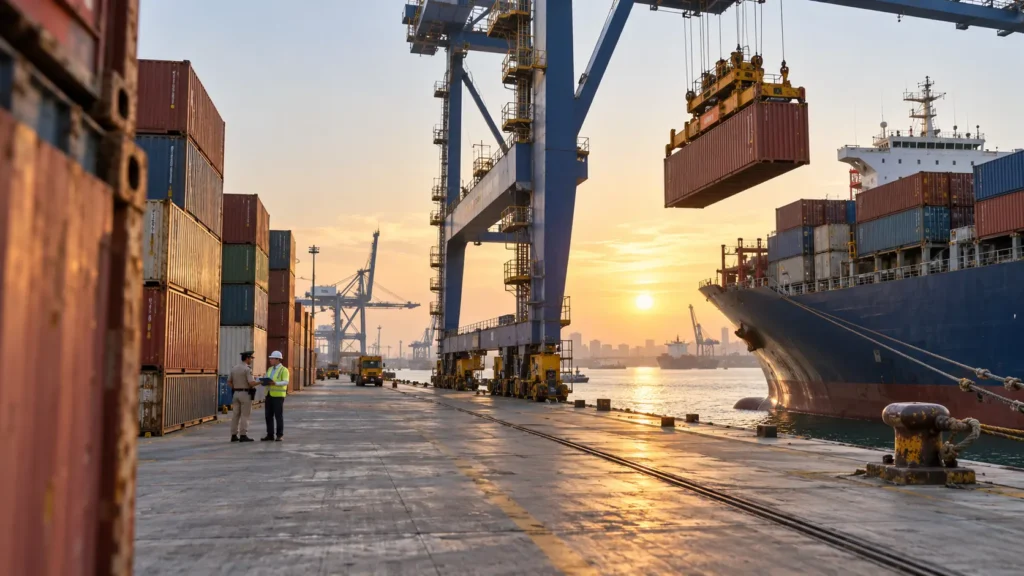
- Customs and documentation.Egypt requires importer registration, advance cargo information filing, and complete shipping documents. A wrong HS code or a missing paper can hold containers at port and trigger storage charges. A licensed customs broker is worth the fee.
- Currency exposure.Exchange-rate movements affect foreign-currency payments. Agree the pricing currency, validity period, and payment milestones in the contract.
- Quality variation between factories.Not every overseas manufacturer is equal. Demand mill certificates and arrange independent third-party inspection before shipment.
- Distance and change control.Design changes after fabrication starts are expensive. Approve shop drawings and freeze the design early.
- Erection dependency.Make sure the supplier provides erection drawings and clear supervision terms, and that the scope split with your local contractor is written down.
Local Fabrication by Steel Structure Companies in Egypt: Strengths and Limits
Where local fabrication is strong
- Short communication loop.You can visit the workshop, inspect progress, and resolve questions in person.
- No import clearanceon the finished structure, which suits small or urgent jobs.
- Easy modifications.On-site adjustments and repairs are quicker when the fabricator is nearby.
- Local-content preferences.Some tenders and clients favor Egyptian-made work.
Where it falls short
- Capacity limits.Fewer workshops have automated lines able to produce large PEB volumes quickly, and some subcontract part of the work.
- Variable engineering.Some fabricators use conventional, heavier designs rather than optimized frames.
- Raw-material exposure.Local pricing is still tied to international steel markets and local availability.
- Uneven quality.Standards differ widely between workshops, so verification matters just as much as with imports.
Side-by-side comparison
| Factor | Direct import (PEB) | Local fabrication |
| Cost per m² (large projects) | Often lower, including freight and duties | Often higher at scale; competitive for small jobs |
| Lead time | Longer: production + shipping + clearance | Shorter, especially for small projects |
| Engineering | Optimized PEB design using specialist software | Varies; often conventional design |
| Quality control | Automated lines; needs third-party inspection | Easy site visits; depends on the workshop |
| Customs and paperwork | Importer’s responsibility | Minimal for the finished structure |
| Currency risk | Higher | Lower on labor; steel price still global |
| Design changes | Best made before production starts | Easier to adjust during build |
| Scale | Strong for large and multi-building projects | Limited by workshop capacity |
| Best suited for | Warehouses, factories, large spans, campuses | Small sheds, extensions, repairs, urgent jobs |
How to evaluate any steel structure company in Egypt
Whichever route you choose, the supplier matters more than the route. Use this checklist with every steel structure company you consider:
- Legal standing.Ask for the commercial register and tax card, plus importer registration if the company imports.
- Proven projects in Egypt.Request references and, where possible, visit a completed building.
- Engineering capability.Confirm who designs the structure, which codes they apply (the Egyptian steel design code or an international standard you specify), and whether you receive calculation notes and drawings.
- Material traceability.Ask for mill test certificates, the steel grade, and the coating specification.
- Fabrication facility.Check quality-management certification and welder qualifications, and ask about a factory audit.
- Scope and Incoterms.Confirm exactly what is included: anchor bolts, sheeting, insulation, gutters, doors, erection, transport, and customs clearance.
- Schedule commitments.Get delivery and erection milestones in writing, ideally with remedies for delay.
- Warranty and after-sales.Ask about coating warranties, spare parts, and local support after handover.
- Like-for-like pricing.Compare quotes using the same loads, steel weight per m², and coating system, otherwise the cheapest quote may simply be the thinnest design.
Egypt-specific factors to specify: hot summers (consider insulated sandwich panels and roof ventilation), dust and sand exposure, local wind and seismic parameters, and stronger corrosion protection for coastal locations such as Alexandria, Port Said, or Ain Sokhna.
Customs, clearance, and SCZONE: what to prepare
If you import, treat clearance as a workstream, not an afterthought. Prepare these early:
- Importer registration and the advance cargo information filing for each shipment.
- Commercial invoice, packing list, bill of lading, and certificate of origin that match each other exactly.
- Correct HS code classification for each product group (frames, sheeting, panels, fasteners).
- A licensed customs broker and a realistic allowance for port handling and storage.
- A confirmed delivery term (FOB, CIF, or DDP) so responsibility is never ambiguous.
- For projects inside the Suez Canal Economic Zone, confirmation from SCZONE of which incentives apply to your license and materials.
Important: duty rates, safeguard measures, and incentives change over time. Verify current rules with your customs broker or the relevant authority before finalizing your budget.
When each route makes the most sense
Importing tends to win for larger or repeated buildings, long clear spans, multi-building campuses, and projects where cost matters and there is time to plan the logistics.
Local fabrication tends to win for small structures, extensions to existing buildings, urgent timelines, and jobs that need frequent on-site changes.
A hybrid is common Many projects import the engineered primary frame and sheeting, then use Egyptian contractors for foundations, erection, and secondary items. This captures import pricing while keeping local control on site.
How Welldone Steel approaches Egyptian import projects
As an importer, our job is to remove the risks listed above. Our approach is built around:
- Engineering each building to your actual loads, site conditions, and code requirements.
- Fabrication supported by material certificates and pre-shipment inspection.
- Coordinating shipping and the documentation your customs broker needs.
- Supplying erection drawings and supporting your local erection team.
- Quoting on a clear, itemized scope so you can compare us fairly with any local fabricator.
Your decision checklist
Answer these questions before you request quotations:
- What is the building size, clear span, and eave height?
- What is your target completion date, and is there time for production, shipping, and clearance?
- Where is the site: inland, coastal, or inside SCZONE?
- Will you pay in Egyptian pounds or foreign currency?
- Do you already have a customs broker, or do you need help arranging one?
- Is erection included in the supplier’s scope?
Which design code and load criteria must the structure meet?
Conclusion
Choosing between importing and local fabrication comes down to scale, schedule, and how well you can verify the supplier. Compare like for like, ask for documents, and plan clearance early. If you would like a clear, itemized comparison for your project, contact Welldone Steel through the form or WhatsApp above.