Buying a steel warehouse or factory from China is the easy part. Getting it through Nigerian customs without demurrage, rejected paperwork, or an unexpected duty bill is where many projects lose weeks.
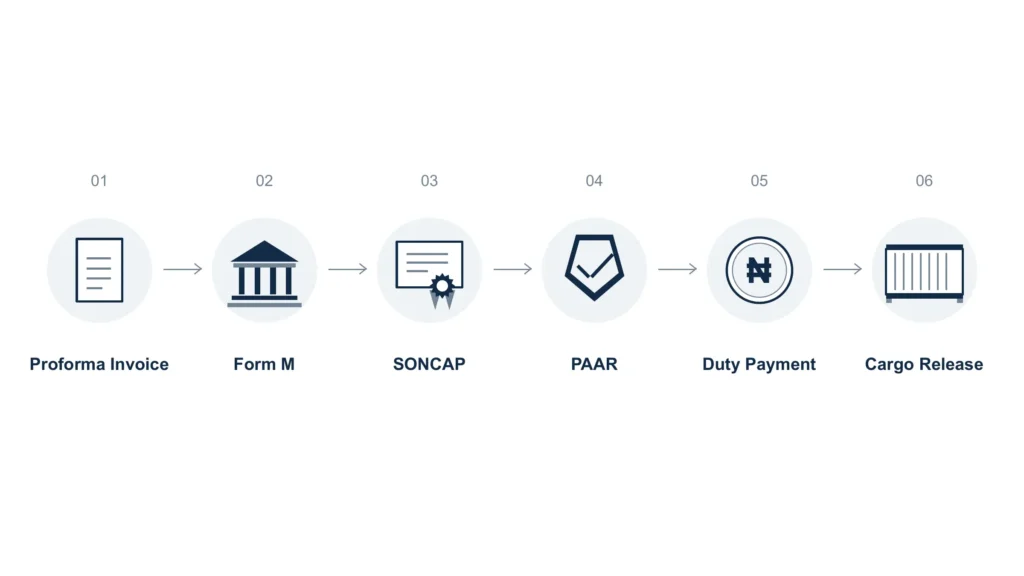
If you are planning a project in Lagos, Lekki, Ogun, Port Harcourt or Kano, the compliance chain is predictable: classify the goods, open a Form M, obtain SONCAP documentation, secure a PAAR, then pay duties and clear the cargo. Each step depends on the one before it, and mismatched details between documents are a common reason for delay.
This guide explains how importing steel structures to Nigeria works for B2B buyers: what customs examines, which charges apply, how the Nigerian Single Window now fits in, and how to avoid the mistakes that cost time and money. It is general guidance, not legal or customs advice. Rules and rates change, so confirm every figure with your licensed customs agent and your authorised dealer bank.
What Nigerian Customs Looks at When Steel Structures Arrive
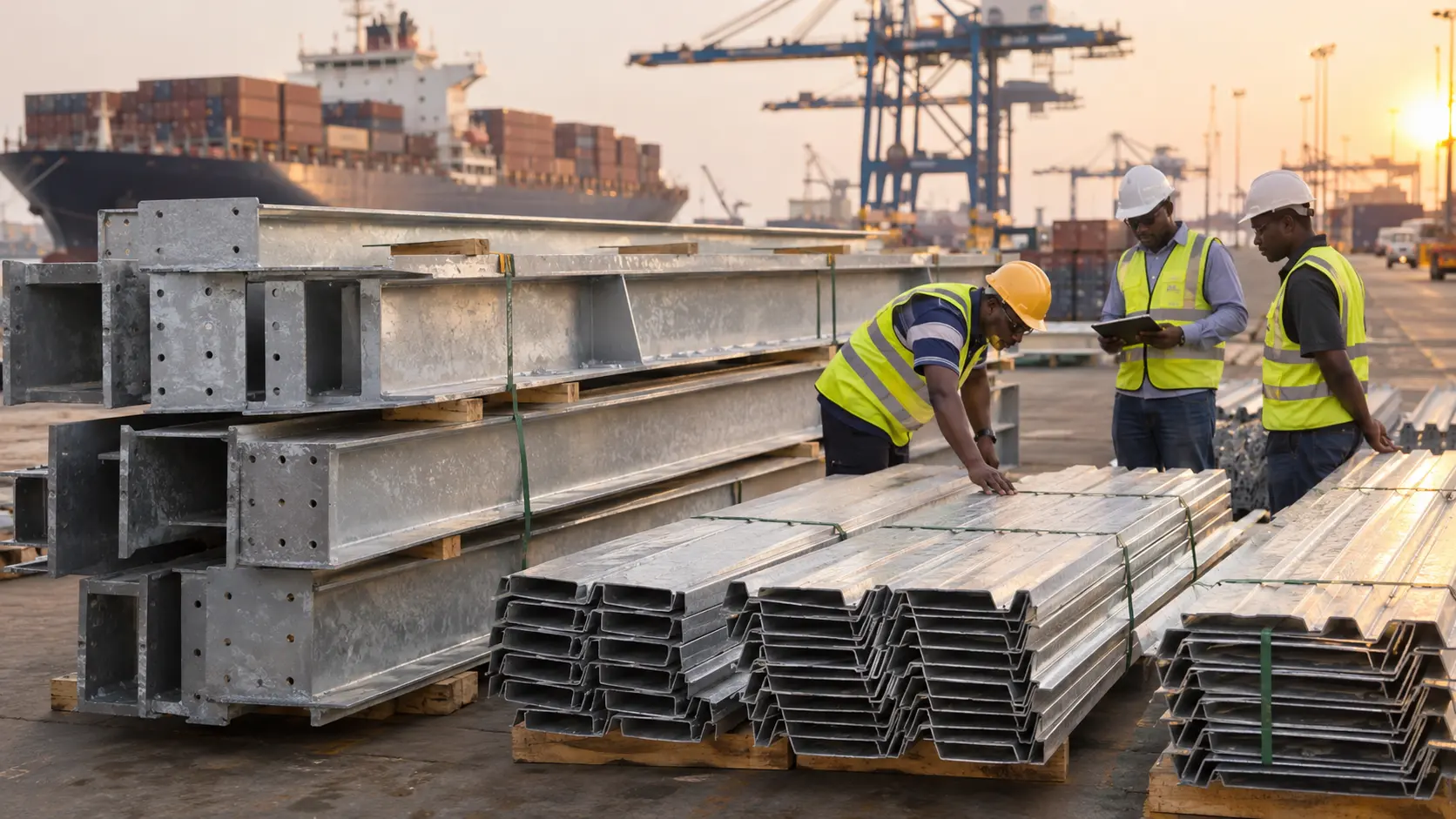
Customs does not see a “warehouse”. It sees a bundle of fabricated components, each described on your invoice and packing list. How those goods are described and classified drives your duty rate, your documentation, and your clearance risk.
HS classification: 7308 versus 9406
Fabricated structural steel such as columns, beams, trusses, purlins and roof frameworks is normally classified under HS heading 7308 (structures and parts of structures, of iron or steel). The heading text specifically excludes prefabricated buildings of heading 9406. Whether a particular shipment is treated as 7308 components or a prefabricated building depends on what is actually shipped and how it is presented.
That decision belongs to your customs agent and ultimately to customs. Do not choose a code because it looks cheaper. Misclassification can lead to reassessment, penalties and delays. Agree the classification with your agent before the Form M is opened so that every document uses the same wording.
Why consistent descriptions matter
Customs compares your Form M, commercial invoice, packing list, bill of lading and SONCAP certificate. A shipment described as “steel structure components” on one document and “factory building” on another invites questions. Keep product descriptions, quantities, weights and values identical across all documents.
Import Duties, Levies and VAT on Steel Structures in Nigeria
Nigeria applies the ECOWAS Common External Tariff (CET), extended to 10 digits, to goods from outside the region. Chinese-origin steel does not qualify for ECOWAS intra-regional trade preferences, so the standard CET rates apply.
For Chapter 73 steel articles, published tariff data shows Nigerian rates ranging from 5% to 20%, depending on the exact tariff line. Some products can also attract an Import Adjustment Tax (IAT) or sit on the National List of reduced-rate goods. Both lists were revised under the 2026 Fiscal Policy Measures, implemented through the Customs, Excise Tariff, Etc. (Variation) Order (2026). Always check the current tariff line, not last year’s rate.
Here is how the main charges typically stack up:
| Charge | Typical basis | What to confirm |
|---|---|---|
| Import duty | Percentage of CIF value, set by HS line | Exact 10-digit line in the 2026 schedule |
| Import Adjustment Tax | Only on listed lines | Whether your line appears on the revised IAT list |
| ECOWAS levy | Small percentage of CIF | Current rate from your agent |
| VAT | 7.5% on CIF plus duty and levies | Any exemption claims |
| Other customs and port charges | Varies | Written landed-cost estimate from your agent |
Customs also has a history of contested levies, including the 4% Free on Board charge, which has been suspended, challenged and disputed in practice. Do not assume your quote reflects every charge. Ask your clearing agent for a written landed-cost estimate based on the current tariff before you commit to a delivery schedule.
Form M and the Nigerian Single Window
Form M is the mandatory pre-import document for goods entering Nigeria. Your Nigerian company, as the importer, opens it electronically through an authorised dealer bank on the Nigerian Single Window. Welldone Steel cannot open it on your behalf, but we supply the accurate proforma invoice and technical documents the process needs.
Practical points:
- Open it before shipment. Form M is the entry point to the chain. PAAR cannot be issued without it.
- Match it to the proforma invoice. Supplier name, description, quantity, value and HS code should align with later shipping documents.
- Allow for amendments. If quantities, values or consignee details change after the Form M is opened, correct it through your bank before shipping, not at the port.
- Watch the transition rules. The 2026 tariff changes included a 90-day transition for importers who had already completed Form M and signed irrevocable contracts. That window has passed for earlier orders, so new orders should assume the revised schedule.
SONCAP Certification for Steel Structures
SONCAP is the Standards Organisation of Nigeria’s conformity programme for regulated imports. It is typically a two-stage process:
For official certification requirements and procedures, consult the Standards Organisation of Nigeria SONCAP guidelines.
- Product Certificate (PC): issued for the product line after assessment by an accredited conformity assessment body.
- SONCAP Certificate (SC): issued for each specific shipment, linked to the bill of lading.
An important 2026 change: from 27 March 2026, SON requires SONCAP and import permit applications to be initiated through the National Single Window (nsw.gov.ng). Accredited inspection firms may still generate certificates on the SON portal, but activating them for Form M, PAAR and cargo clearance happens on the Single Window. A certificate that exists but is not activated will not help you at the port.
Because the SC is tied to each shipment, start the documentation while production is still underway rather than after the cargo is loaded. Late or incorrect SONCAP paperwork is one of the more common causes of port delays.
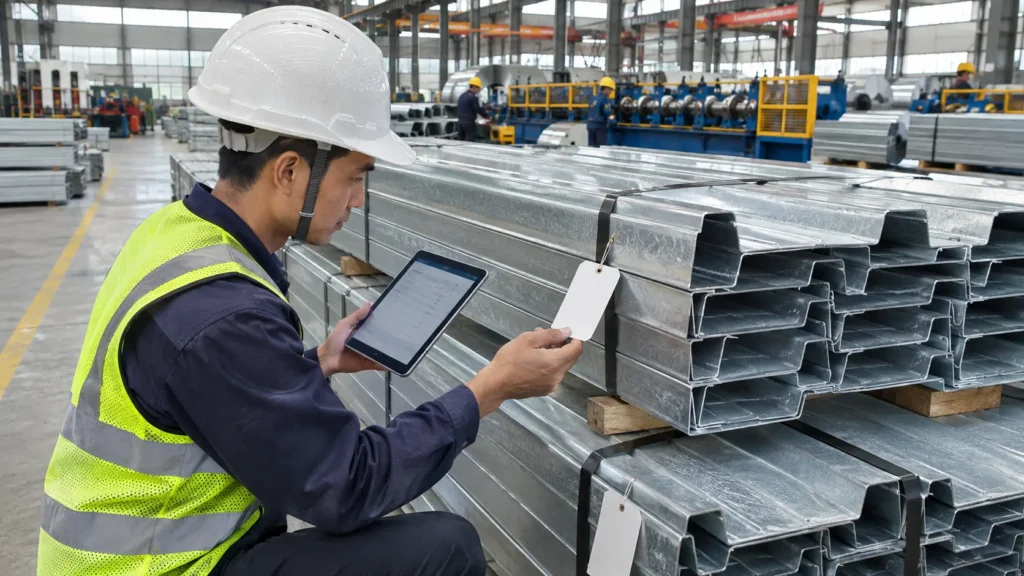
If you are shipping a warehouse, factory or workshop frame and want to confirm which documents your project will need, discuss your project requirements with the Welldone Steel team early, before the proforma invoice is finalised.
From PAAR to Port Release: The Clearance Steps
Once Form M and SONCAP are in place, the usual sequence looks like this:
- Shipping documents are finalised. Bill of lading, commercial invoice, packing list and certificate of origin must match the Form M exactly.
- PAAR (Pre-Arrival Assessment Report) is processed. It is issued on the basis of the Form M, cargo manifest and supporting records such as SONCAP documentation, and it must be in place before the vessel arrives. A PAAR filed after the cargo lands is a common source of default.
- Single Goods Declaration is lodged. Your agent declares the goods electronically, and customs moves the consignment toward assessment.
- Duties and charges are assessed and paid.
- Examination and release. Customs may examine the cargo. Once cleared, the cargo is released for haulage.
Marine insurance is another requirement to confirm with your bank. Nigerian practice generally expects cover arranged through a Nigerian insurer.
Common Mistakes That Cause Delays and Demurrage
- Starting paperwork after production ends. Compliance should run in parallel with fabrication.
- Mismatched details across documents. Description, quantity, weight and value should agree everywhere.
- Choosing an HS code for the lowest duty. Classification should reflect what is actually shipped.
- Ignoring the 2026 tariff changes. Using last year’s rates in your budget can leave a gap at the port.
- Treating SONCAP as a formality. A missing or unactivated SC can hold the whole container.
- Forgetting storage and demurrage. Port delays cost money quickly, so build contingency into the schedule.
- Skipping a written landed-cost estimate. Verbal quotes from agents leave room for surprises.
Choosing the right manufacturer reduces risk further. Our guide on choosing steel construction companies in Nigeria explains the design and structural checks to make, and our article on factory acceptance testing for prefabricated steel structures shows what pre-shipment inspection should cover.
Matching the Building to the Import Plan
The way you order affects what you import. A few examples:
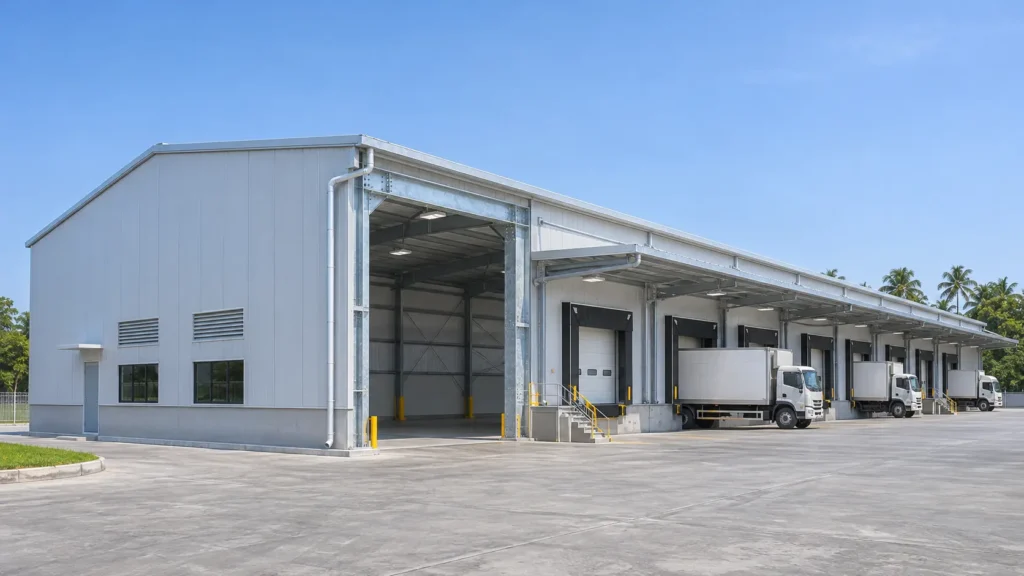
- A steel warehouse building for storage or logistics is usually shipped as a complete package of frames, purlins and cladding, so one consistent bill of materials helps keep documents aligned.
- A steel factory building with crane support or heavy equipment loads needs accurate weights and component lists for both engineering and customs.
- If you are adding insulated walls or roofing, sandwich panels should be listed clearly on the invoice and packing list.
Ask for a structured bill of materials with steel grades, quantities, weights and packing details. It supports your engineer, your customs agent and your SONCAP documentation.
How Welldone Steel Supports Nigerian Importers
Welldone Steel designs and manufactures prefabricated steel buildings for industrial, commercial and agricultural projects, with ISO 9001 and CE certification. For Nigerian buyers, we help with the parts of the import process that start at the factory:
- Accurate proforma invoices, packing lists and bills of materials.
- SONCAP documentation support, coordinated with your importer and clearing agent.
- Coordination with our Lagos logistics partner for port clearance planning.
Your Nigerian company remains the importer of record and works with its bank and licensed customs agent. Our role is to make sure the documents from the supplier side are complete, consistent and ready on time. For more on our Nigerian work, see our Nigeria page.
Conclusion: Plan Compliance With the Same Care as the Building
Importing steel structures to Nigeria rewards early planning. Classify the goods correctly, align every document, open the Form M on time, activate SONCAP through the Single Window, and obtain a written landed-cost estimate before you commit to a schedule.
If you are planning a warehouse, factory or workshop in Nigeria, request a customized quotation from Welldone Steel and send us your building size, site location and port of entry. Our team will help you prepare the supplier-side documentation and coordinate with your logistics partner in Lagos.